Introduction
BigChain is a decentralized Layer 1 blockchain built from the ground up using Rust, designed to address the "Blockchain Trilemma" by optimizing for extreme performance without sacrificing security or decentralization.
In an era where decentralized applications demand the same responsiveness as traditional web platforms, BigChain provides the infrastructure for a seamless transition. By leveraging modern cryptographic primitives like BLAKE3 for hashing and Ed25519 for digital signatures, Lumina achieves sub-second finality and the ability to process thousands of transactions per second (TPS) on commodity hardware.
Our mission is to enable a new generation of high-frequency DeFi, real-time gaming, and enterprise-grade decentralized solutions that are not hindered by high gas fees or slow confirmation times.
System Architecture
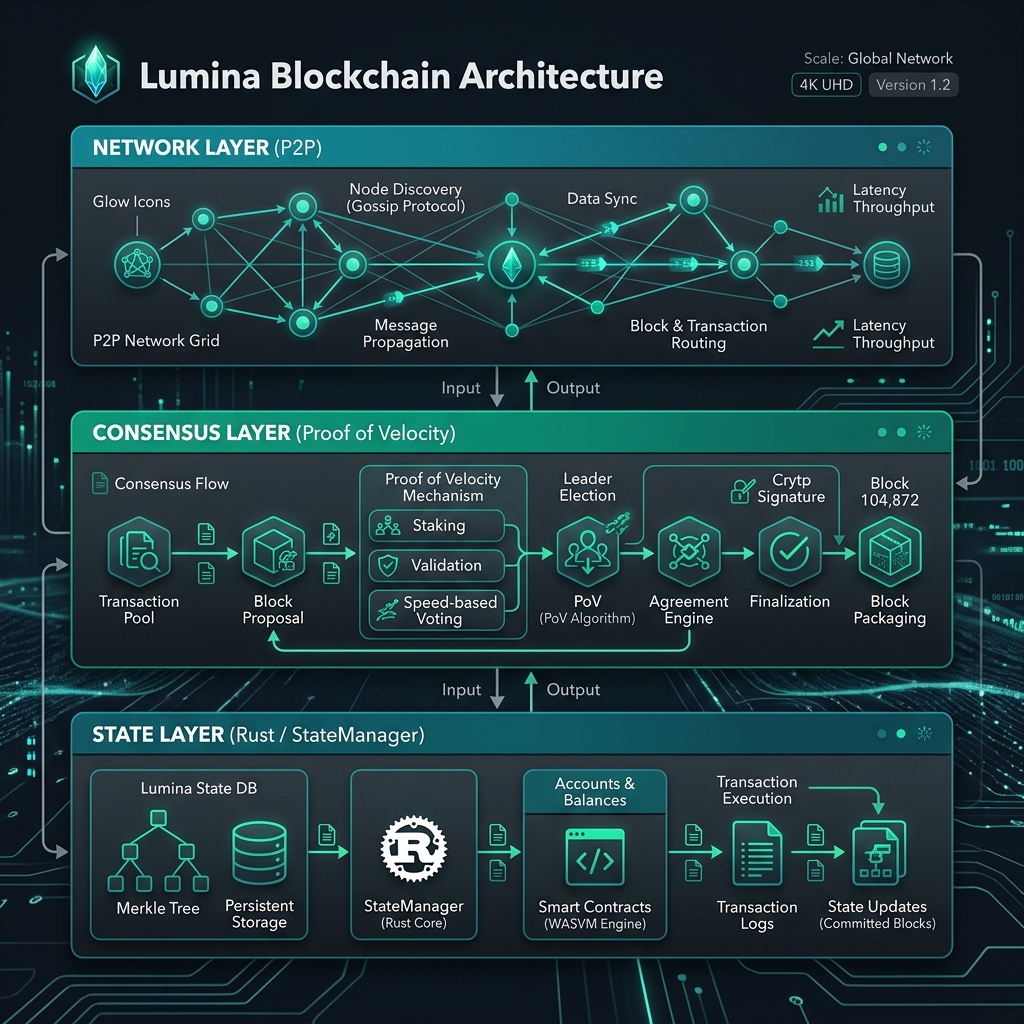
BigChain is built on a custom asynchronous engine powered by the Tokio framework. This allows our nodes to handle massive amounts of concurrent connections (Gossip Protocol) and transaction validations in parallel across all CPU cores.
Rust-Native Engine
Unlike many chains that use interpreted VMs, BigChain executes state transitions natively in Rust. This results in minimal memory overhead and zero garbage collection pauses, which is critical for consistent block times.
Advanced Serialization
We utilize Bincode binary serialization for all on-chain data. Bincode is significantly more compact than JSON or Protobuf, allowing us to fit more transactions into each 2-second block without increasing bandwidth requirements.
Architecture Visualization
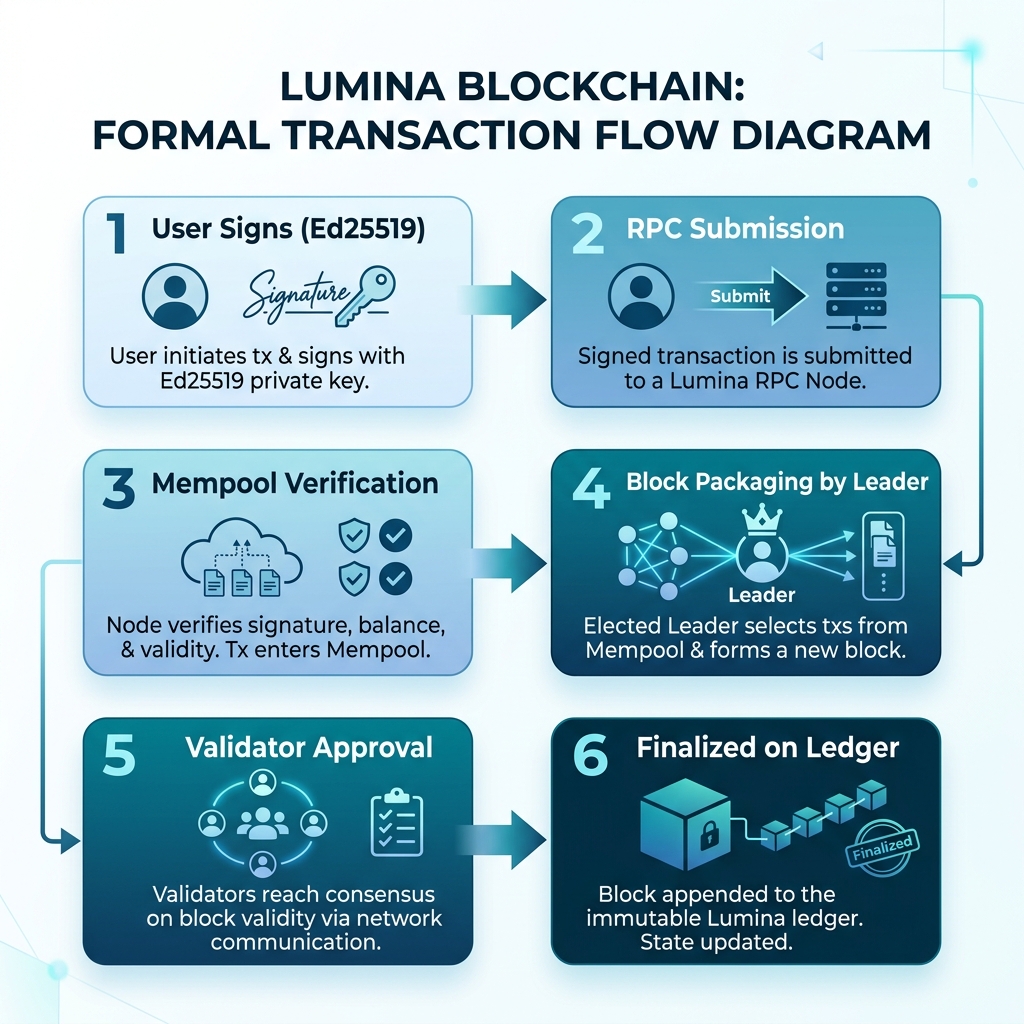
Transaction Lifecycle Flow
Proof of Velocity (PoV)
BigChain utilizes a custom Proof of Velocity consensus mechanism—a variation of Delegated Proof of Stake (DPoS) optimized for throughput.
In traditional DPoS, stake weight is the only metric for leader selection. PoV introduces a second metric: Propagational Velocity. Validators are continuously measured on how quickly they can verify and gossip blocks. Nodes with higher velocity are given higher priority in the leader rotation, ensuring the network is always driven by its most efficient participants.
This "Natural Selection" of nodes creates a self-optimizing network where validators are financially incentivized to upgrade their hardware and bandwidth, directly benefiting the entire ecosystem with faster finality.
BIG Utility & Economy
The BIG token is the heartbeat of the BigChain ecosystem. It is used for transaction fees, staking collateral, and protocol governance.
| Metric | Formal Specification |
|---|---|
| Dynamic Block Reward | 0.001 - 0.01 BIG (Calculated per transaction load) |
| Network Base Fee | 0.00001 BIG (Base unit for standard transfers) |
| Fee Adjustment | Adaptive algorithm based on mempool congestion |
| Leader Bonus | 10% of Block Pool (Incentivizes block production) |
Network Integrity
Every byte in BigChain is protected by the BLAKE3 hashing algorithm, which is significantly faster and more secure than traditional SHA-256. BLAKE3's parallelizable design allows validators to verify block integrity across multiple CPU cores simultaneously.
Security is further hardened by Quantum-Resistant considerations in our P2P stack and the use of the Ed25519 signature scheme for all wallet operations.
BigChain also implements a Decentralized Slashing mechanism: any validator attempting to sign two different blocks at the same height (double-signing) will have their entire staked balance permanently revoked and redistributed to honest participants.
Still have questions?
Read our detailed technical documentation or join our developer community on Discord.